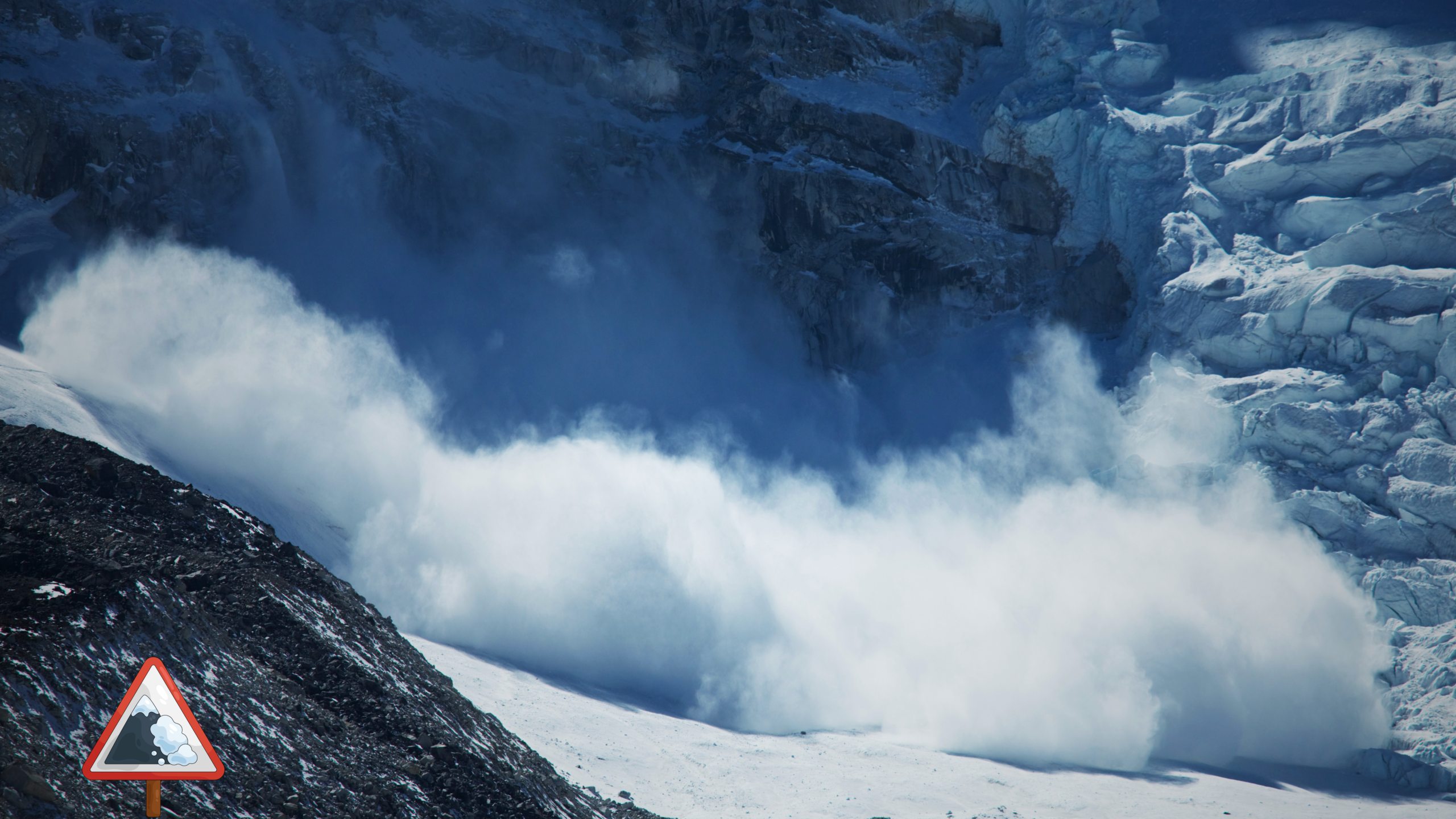
If you are a mountaineer or a climber or even a trekker coming to Nepal then, you must have a proper information regarding the risks in the mountains and their types. You might have heard about Avalanches, but do you know that they do have types? Not all slipping snow is same kind of Avalanche. There are its types and are mainly occur at the Himalayas. In context of Nepal there are mainly five types of Avalanches, each is defined with different name and different reason of slipping of the snow.
Ice Avalanches
If there is one avalanche type that defines Himalayan climbing more than any other, its this one, the Ice Avalanches. This type of avalanches occurs when the towering block of ice at the top start to move. These blocks are not well balanced; the gravity holds them in a place.
When these towering blocks slide, it collapses into different sized chunks of ice crashing down onto the route below. This is the most common type of Avalanches that occurs in the Himalayas in Nepal. This is why climbers cross the Icefall before sunrise, where the ice is still frozen.
Wet Slab Avalanches
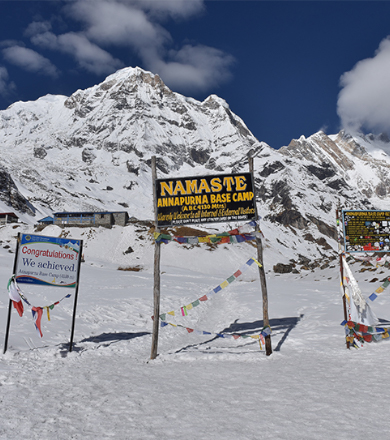
Wet Slab is another most common type of avalanche that is completely different from Ice avalanche but is as risky as it is. Wet slab avalanche occurs when a heavy layer of snow sits above the ice slab. Especially during monsoon or during unusual intense storm, the snow builds faster than it can bond to the layer beneath it. Due to the heavy snow the whole slab breaks away at once and slides, carrying enormous weight and force. Such avalanches are seen mostly in the Annapurna region around Thorongla Pass.
Loose Snow Avalanches
Loose Snow avalanche is what people actually think an avalanche is, sliding snow from the top. Loose Snow occurs after a fresh snow fall where the new snow hasn’t yet bonded to the older snow underneath. On a steep slope, the snow starts sliding down and along the way it picks up more loose snow. Loose Snow avalanche itself is not that dangerous and can be managed, but the thing is where it pushes us into makes it dangerous. These are usually smaller and rarely bury anyone outright.
Earthquake- Triggered Avalanches
Himalayas holds too much ice and snow and sits on one of the most active fault lines on Earth, and a strong earthquake can shake loose a slope. Situated at such altitude, even a small shake can disbalance and can cause different avalanches to occur. In the past, many devastating events have occurred in places like Langtang and Everest because of earthquake.
Gliding Avalanches
A gliding avalanche is when the entire snowpack, not just a surface layer, slowly slides off smooth ground beneath it. It cannot be trigerred easlily. It needs very specific ground conditions, and unlike other types, it can’t be triggered by a person walking on it.
This type of avalanche matters more for the infrastructure; roads, buildings than for trekkers on foot. Comparatively it’s the least relevant of the six types to Nepal’s avalanche.
Taken together, these five to six avalanche types make clear that risk in the Himalaya is neither uniform nor random, each has its own triggers, terrain, and season. For this reason, a proper risk assessment before any trek or climb is not optional; it is a fundamental part of responsible mountain travel.
For trekkers and climbers alike, this means going beyond simply choosing a route. It means checking seasonal and weather conditions in advance, understanding which hazard type applies to which section of trail, and travelling with guides who can read terrain and snow conditions in real time. Preventive measures, from timing a crossing correctly to carrying appropriate safety equipment and heeding a guide’s judgment to delay or reroute, are what separate a well-managed expedition from a preventable tragedy.