Ethnics Groups living in Everest Region
- Home
- Ethnics Groups living in Everest Region

Ethnics Groups living in Everest Region
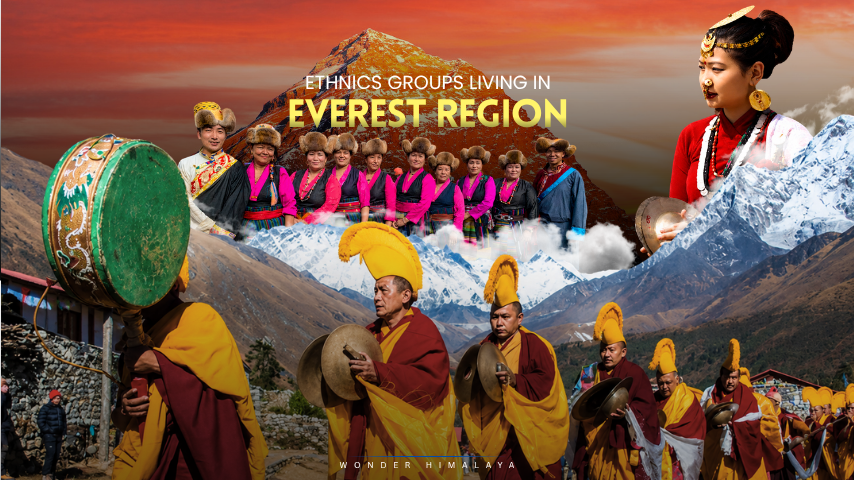
Trekking to Everest is not just about reaching the Base camp or to the top. If you are trekking to Everest, you’ll not just travel the region but will also travel passing different villages. And every village have different kind of people living there, from different cast and following different region. Let Wonder Himalaya take you today through the ethnic groups of Everest Region.
There are mainly three ethnics groups in Everest. And the groups settlement depends on the elevation. Sherpas holds the majority of the population where as you can find people from Rai and Tamang community people as well. The culture of each ethnic group is different from another. The festivals are different, the dresses are different, the music is different and the food varies as well.
The Sherpa
Sherpas are in high numbers in Everest as compared to any other ethnic groups. The Sherpa had been living there from ages, guiding the trekkers and climbers to their destination. As you travel above 3000 meters, where it is abnormal for most of us to live, you begin to see the strong presence of the Sherpa community. Sherpa are regarded as the warriors of mountains and holds gifted skills of climbing. The name Sherpa comes from the Tibetan words shar, meaning east, and pa, meaning people. Historians believe that Sherpa people gradually migrated from eastern Tibet between the 12th and 15 centuries. They are believed to have entered Nepal through areas near Tingri and now are the permanent residents of the Himalayas. Historically sherpa had four main clan called Minyakpa, Lamasherwa, Thimmi, and Chawa. However, these families developed into many different Sherpa clans. Over many generations, the Sherpa people developed a close relationship with the mountains. Their knowledge of the high valleys, mountain passes, weather, and difficult terrain became an important part of their way of life.
Traditional Sherpa Clothing
Traditional Sherpa clothing includes the chhuba, a thick woolen robe that reaches below the knees. It is tied around the waist with a sash called a kara, which also creates a small storage pouch known as a tolung. Traditional clothing also includes the raatuk, kanam, and an outer jacket called the tetung. Sherpa women traditionally wear a distinctive cap called the shyamahu. Today, traditional clothing is mostly worn during festivals and special cultural occasions rather than as everyday clothing.
Sherpa Culture and Religion
If we talk about Sherpa culture, its deeply connected with Tibetan Buddhism. One of the most important celebrations in the region is the Mani Rimdu festival at Tengboche Monastery. It is usually celebrated around October or November and continues for three days. During this time, people take part in prayers, chanting, masked dances, and blessings. In this time the local community gathers together and celebrate the festivals with their own way. For us mountains are a thing of beauty that we admire, but for sherpa people, these mountains are more than just a beautiful place. It is the home of sherpa people and they have deep spiritual importance and have love and respect for the Himalayas than anyone of us. The mountains have been part of their lives for generations. Long before modern trekking became popular, Sherpa communities travelled through the Himalayan passes as traders and porters, carrying goods such as salt, wool, and other products between the mountains and Tibet. The trekking industry we see today has grown from this long history of mountain travel. Without Sherpa, no one would have explored the mountains like we do.
The Kirat Rai and Kulung Communities
As you trek down from Khumbu toward Solu and the lower hills, you begin to see another group of ethnic people living there. While the Everest is famous as a home of Sherpa people, their lives indigenous Kulung and Kirat Rai communities. While Sherpa communities are strongly associated with the high mountains, Rai and Kulung communities have a much older presence in the lower parts of the region. Historically, the wider area was connected with the ancient Kirat kingdoms and the Majhkirat region before the unification of Nepal. The Kirat community itself holds a long history and tradition. Kirat dynasty is connected with legendary King Yalamber. The Rai, Limbu, Yakkha, and Sunuwar are among the communities associated with this wider Kirat
Kirat Attires
The traditions and culture of Kulung and Rai communities is slightly different from the Tibetan Buddhist Culture found in higher region. The community of Kulung and Rai has a rich cultural heritage rooted in the Himalayan hills. Their tradition is unique and interesting as it includes vibrant folk songs, dances, festivals, rituals, and traditional attire. And also, they are known for their diverse languages, customs, music, dance, and strong community traditions. Their traditional spiritual practices include rituals led by Phedangma priests. The community often gather around and worship the Himalayas, their ancestor and respect for nature and the Himalayas plays an important part of Kulung and Rai life.
These are the Ethnics groups living under the roof of Mount Everest. People of these community sees Himalayas as their home and have immense respect and love for it. They have been there before the trekking or expedition was in practice. The people of the Himalayas live with limited facilities and face immense challenges in their daily lives. Their resilience, traditions, and way of life make these remote places possible for us to experience and explore as travelers.
Kirat Culture & Tradition
The traditions and culture of Kulung and Rai communities is slightly different from the Tibetan Buddhist Culture found in higher region. The community of Kulung and Rai has a rich cultural heritage rooted in the Himalayan hills. Their tradition is unique and interesting as it includes vibrant folk songs, dances, festivals, rituals, and traditional attire. And also, they are known for their diverse languages, customs, music, dance, and strong community traditions. Their traditional spiritual practices include rituals led by Phedangma priests. The community often gather around and worship the Himalayas, their ancestor and respect for nature and the Himalayas plays an important part of Kulung and Rai life.
These are the Ethnics groups living under the roof of Mount Everest. People of these community sees Himalayas as their home and have immense respect and love for it. They have been there before the trekking or expedition was in practice. The people of the Himalayas live with limited facilities and face immense challenges in their daily lives. Their resilience, traditions, and way of life make these remote places possible for us to experience and explore as travelers.